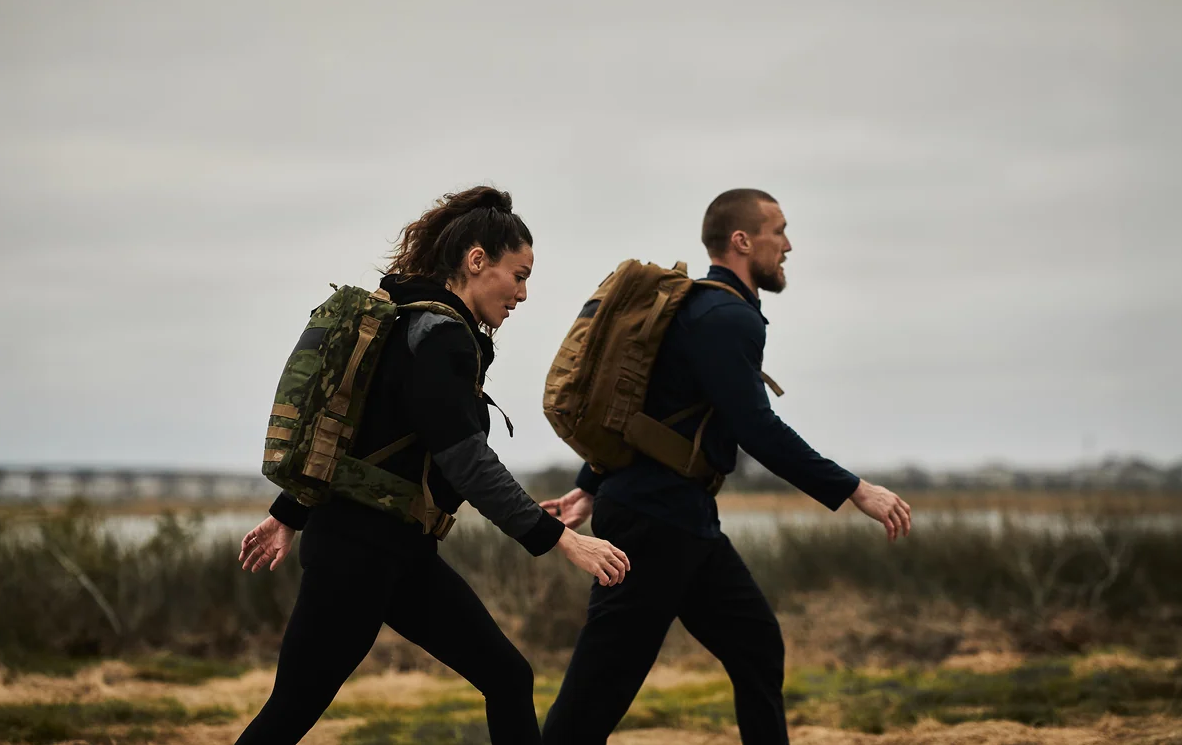
Rucking is walking with a weighted backpack. Adding weight turns an ordinary walk into a more demanding workout, challenging endurance and muscular stamina without requiring running or gym equipment.
The practice originated in military training, where personnel travel on foot carrying equipment and supplies. Recreational rucking follows the same principle, but participants choose their own weight, distance, terrain, and pace.
A short walk with a light backpack may be enough for a beginner. More experienced participants can tackle longer routes, steeper hills, and heavier loads. The key is choosing a workload that improves fitness without putting excessive strain on the back, shoulders, or lower limbs.
This guide explains what rucking involves, its benefits, the equipment needed, and how to develop a sustainable training routine.
What Is Rucking?
Rucking is a form of loaded walking that involves carrying additional weight, usually in a backpack or purpose-built rucksack. Unlike hiking, which generally takes place on trails or in natural environments, rucking is defined by the external load. It can be done on sidewalks, park paths, forest trails, or other suitable routes.
The name comes from rucksack, a term associated with military backpacks. Loaded marches have been used in military conditioning for generations because personnel must be able to cover distances while carrying essential gear. Recreational rucking adapts this challenge into a fitness activity.
A typical rucking workout involves walking a planned route with a manageable load. Participants may track distance, pace, and duration or simply regulate their effort according to breathing and muscular fatigue.
Adding a backpack changes how hard the body works. The legs support and move the extra mass, while the core and upper back help stabilize it. Hills and uneven ground increase the challenge further.
Rucking also differs from running. It uses walking mechanics without the repeated airborne phases associated with running. However, this does not automatically make it easier on the joints. A heavy backpack can substantially increase the forces experienced by the lower limbs.
Benefits of Rucking
The main rucking benefits come from combining sustained aerobic activity with the muscular demands of carrying external weight. The training effect depends on backpack weight, walking speed, terrain, session duration, and individual fitness.
Cardiovascular Endurance
Walking with a weighted backpack generally requires more energy than unloaded walking at the same speed and incline. Moving the additional mass increases muscular effort and places greater demands on the cardiovascular system.
Rucking can help build aerobic endurance, particularly for people who already walk regularly but want a greater challenge.
Intensity is easy to adjust. Slowing down, choosing flatter terrain, or reducing the load makes a session more manageable. Faster walking and uphill routes increase the effort without requiring a heavier backpack.
The talk test provides a simple way to monitor intensity. During moderate exercise, breathing becomes faster, but speaking in complete sentences should remain possible. If conversation becomes difficult, the workout may be harder than intended.
A route that initially feels demanding may become more comfortable after several weeks. This can reflect improved aerobic fitness, muscular endurance, and familiarity with carrying weight.
Muscular Endurance and Strength
Rucking repeatedly engages the quadriceps, hamstrings, glutes, and calves. These muscles propel the body forward, support the additional weight, and control movement over changing terrain.
The abdominal and back muscles stabilize the torso, while the shoulders and upper back help support the backpack. A properly fitted hip belt may transfer some of the load toward the pelvis.
Terrain changes the muscular demands. Climbing increases the effort required from the glutes and other lower-body muscles. Descending involves controlled braking, particularly through the quadriceps.
Regular loaded walking can improve muscular endurance. For previously untrained individuals, it may also provide an additional strength stimulus, although endurance remains its primary muscular benefit.
Rucking is not a replacement for comprehensive resistance training. Squats, hinges, presses, and pulling exercises provide movement patterns and loading options that backpack walking cannot reproduce.
Energy Expenditure
Carrying a weighted backpack increases the energy cost of walking at a given speed and incline. The additional mass requires more muscular work, especially on hills.
Actual calorie expenditure depends on body weight, backpack load, pace, walking efficiency, distance, and elevation changes. Two people completing the same route may burn different amounts of energy.
Calorie calculators provide estimates rather than precise measurements. For training purposes, recording duration, distance, and pack weight is generally more useful than targeting an exact calorie number.
For regular walkers, rucking offers a straightforward way to make familiar routes more physically demanding.
Accessibility and Outdoor Activity
Rucking requires little specialized equipment. A sturdy backpack, suitable footwear, and a safe walking route are enough to begin.
Sessions can fit different schedules. A short neighborhood walk works on busy days, while longer outings allow more time for endurance training.
Outdoor exercise may also support mood and general well-being. These benefits are not unique to rucking, but the activity provides another reason to spend time outside.
Group walks add a social element. Participants can follow the same route while adjusting their individual loads to accommodate different fitness levels.
What Equipment Do You Need for Rucking?
The essentials are a comfortable backpack, securely packed weight, appropriate footwear, and clothing suited to the conditions. Specialized equipment becomes more useful as training demands increase, but beginners can often start with items they already own.
Choosing a Rucking Backpack
A suitable rucking backpack should distribute weight comfortably and prevent its contents from shifting during movement.
Look for these features:
- Adjustable shoulder straps: Help secure the pack without excessive movement.
- A supportive back panel: Distributes pressure and protects the back from hard objects.
- Internal compartments or weight sleeves: Keep dense items from sliding around.
- A sternum strap: Improves stability when adjusted comfortably.
- A hip belt: May transfer part of the load toward the pelvis, depending on its design and fit.
- Durable materials and stitching: Help the backpack withstand repeated use with concentrated weight.
A regular daypack can handle light beginner loads if it fits well and has adequate structural strength. Thin straps, weak stitching, or an unsupported back panel may become problematic with heavier contents.
Dedicated rucking backpacks typically include reinforced compartments designed for weight plates. These can improve load stability and durability during frequent training.
Whatever the design, the pack should sit close to the body without bouncing or pulling excessively backward.
Selecting and Securing the Weight
Purpose-made ruck plates provide a compact, predictable load, but they are not essential.
Water bottles, sealed sandbags, and small weight plates can also work if the backpack can support them safely. Hard objects should be padded to prevent uncomfortable pressure against the back.
Keep the weight close to your back and secure it against movement. The best vertical position depends on backpack design, terrain, and load. On uneven ground, stability matters more than following a fixed packing rule.
Avoid leaving heavy objects loose. Shifting contents can affect balance, create pressure points, and damage the backpack.
When calculating rucking weight, include the backpack itself, water, and everything carried inside. Adding a 10-pound plate does not necessarily mean the total pack weighs only 10 pounds.
Footwear and Clothing
Comfortable walking or running shoes work well on paved routes and maintained paths. Trail shoes or hiking footwear may provide better traction on rocky, muddy, or uneven surfaces.
Fit matters more than footwear category. Shoes should hold the heel securely, provide enough room for the toes, and remain comfortable under load.
Hiking boots are optional. Some participants appreciate their protection and durability, while others prefer the flexibility and lighter weight of athletic shoes.
Moisture-wicking socks help manage sweat and friction. Clothing should allow unrestricted movement through the shoulders, hips, and legs.
For longer outings, bring drinking water, weather protection, and a charged phone. Remote routes may require additional preparation, including navigation and knowledge of available exit points.
How to Start Rucking
Rucking for beginners starts with a comfortable walking baseline rather than a heavy backpack. The appropriate starting load depends on current fitness, walking experience, and tolerance for carrying weight.
Someone who regularly walks several miles may be ready for a different workload than a person returning to exercise after a long break.
Choosing the Right Weight and Distance
Beginners often start with a total pack weight of approximately 5–10% of body weight. This is a practical guideline rather than a universal training standard, and lighter loads may be more appropriate.
For someone weighing 160 pounds, that range corresponds to approximately 8–16 pounds, including the backpack and its contents.
An initial session of 15–30 minutes on level ground is usually enough to assess comfort and pack fit. There is little benefit in choosing a demanding distance before learning how the body responds to loaded walking.
Finish with controlled posture and no unusual pain. Mild muscular fatigue is expected, but sharp discomfort, numbness, or increasing joint pain warrants stopping.
Time is often easier to manage than distance. A 30-minute walk on flat pavement may be considerably less demanding than the same duration on steep trails.
Building a Rucking Training Routine
One or two weekly sessions provide a manageable starting point for many beginners. Recovery days between loaded walks allow time to assess how the feet, shoulders, back, and legs respond.
The following four-week rucking workout plan illustrates a gradual introduction:
| Week | Frequency | Session Duration | Training Focus |
| 1 | 2 sessions | 15–20 minutes | Light load, level terrain, comfortable pack fit |
| 2 | 2 sessions | 20–25 minutes | Maintain a steady walking pace |
| 3 | 2 sessions | 25–30 minutes | Extend continuous walking time |
| 4 | 2 sessions | 30–35 minutes | Build consistency and endurance |
Keep the initial pack weight unchanged throughout the four weeks. Treat this schedule as a starting point, not a fixed rule. Repeat a week or reduce the workload if fatigue or discomfort persists.
Once the routine feels comfortable, progression can involve:
- Extending the duration of one weekly session.
- Increasing walking speed while maintaining natural mechanics.
- Introducing gentle hills.
- Adding weight in small increments.
- Increasing weekly frequency when recovery allows.
Change one major variable at a time whenever practical. Combining a heavier backpack with longer distances and steeper terrain makes it harder to identify the cause of fatigue.
A simple training log can record total pack weight, route, duration, perceived effort, and discomfort. These details help distinguish steady adaptation from accumulating fatigue.
Walking Technique and Posture
Efficient rucking resembles ordinary walking, with additional attention to pack stability and balance.
Keep your head upright and look ahead. Relax your shoulders and adjust the backpack so it remains close to the torso without restricting arm movement.
A slight forward lean can occur naturally under load, particularly uphill. Excessive bending at the waist may indicate poor pack positioning or an overly heavy backpack.
Use a comfortable stride rather than deliberately taking longer steps. Overstriding can increase braking forces and make walking less efficient.
On steep climbs, shorter steps often provide better control. During descents, reduce speed and avoid forceful, extended strides.
There is no need to hold the torso rigidly. Natural, controlled movement is preferable to forcing an exaggerated upright posture.
Rucking vs Walking and Running
Walking, rucking, and running all develop fitness through movement on foot, but they differ in loading, intensity, and mechanical demands.
Ordinary walking provides accessible aerobic exercise without additional weight. Rucking increases the effort through external resistance. Running typically produces higher cardiovascular intensity at common training speeds and includes repeated flight and landing phases.
| Feature | Walking | Rucking | Running |
| External load | Usually none | Weighted backpack | Usually none |
| Cardiovascular demand | Depends on pace and terrain | Higher than unloaded walking at the same speed and grade | Often higher at typical training speeds |
| Muscular demand | Primarily lower body | Lower body, trunk, and pack stabilization | Lower body with repeated propulsion and landing |
| Impact characteristics | No flight phase | Walking mechanics with additional carried mass | Repeated flight and landing |
| Equipment | Comfortable shoes | Backpack, secured weight, suitable shoes | Running shoes |
| Progression options | Speed, duration, hills | Load, speed, duration, hills | Pace, duration, intervals, hills |
Running can deliver a higher aerobic workload in less time, depending on pace and fitness level. Rucking offers a different challenge by combining sustained walking with external loading.
Neither activity is universally safer or better for joint health. Running produces distinct landing forces, while carrying a heavy backpack increases demands on the lower limbs, back, and shoulders.
The better choice depends on training goals, physical condition, available time, and personal preference. Both can fit into a balanced exercise program alongside strength training.
Safety Tips and Common Mistakes
Most avoidable rucking problems involve excessive weight, unstable equipment, rapid workload increases, or inadequate preparation for the route.
Starting Too Heavy
Military load-carrying standards are not appropriate beginner fitness targets. Military personnel carry equipment to meet operational demands rather than optimize recreational training.
A backpack that feels manageable while standing may become uncomfortable after several thousand steps.
Excessive forward leaning, shoulder pressure, altered walking mechanics, or difficulty maintaining a comfortable pace can indicate that the load is too demanding. Reduce the weight rather than compensating with strained posture.
Increasing Distance and Weight Together
Adding weight while extending the route increases the physical workload in more than one way. Introducing hills at the same time compounds the challenge.
Make adjustments gradually and allow several sessions to assess their effects. A training increase should remain manageable during the walk without producing persistent discomfort afterward.
Ignoring Backpack Fit
A poorly adjusted backpack may bounce, sway from side to side, or concentrate pressure on the shoulders.
Before starting, check that the load is secured and the straps hold the pack comfortably against the body. Adjust the sternum strap and hip belt, if present, according to the backpack design.
Reassess the fit after a few minutes of walking. Persistent shoulder numbness, painful pressure, or noticeable bouncing should prompt an adjustment.
Overlooking Foot Care
Carrying extra weight increases the demands placed on the feet. Pressure, moisture, and repeated friction can contribute to blisters, particularly during longer walks.
Choose footwear that already fits comfortably. Avoid testing unfamiliar shoes on a demanding route.
If a hot spot develops, stop and address it before continued rubbing damages the skin. Adjusting socks, removing debris, or protecting the affected area may prevent a minor irritation from becoming a blister.
Neglecting Recovery
Cardiovascular fitness may improve faster than the tolerance of muscles, tendons, and other load-bearing tissues. Feeling capable of walking farther does not necessarily mean the body is ready for a heavier backpack.
Allow recovery between demanding sessions, especially during the first few weeks. Comfortable unloaded walking or gentle mobility work can be included on other days.
Ordinary muscular fatigue should gradually resolve. Pain that worsens, changes walking mechanics, or repeatedly returns after training warrants reducing the workload and seeking professional assessment when appropriate.
Failing to Account for Weather and Terrain
Heat, humidity, steep grades, and uneven surfaces can make a familiar load harder to carry.
In warm conditions, choose cooler hours when possible, bring sufficient fluids, and adjust the route or duration. Hydration needs vary with temperature, sweat losses, and exercise intensity.
For unfamiliar trails, check the weather forecast, elevation profile, route length, and available exit points.
Beginners are generally better served by predictable routes near home than remote terrain requiring extensive navigation.
Recognizing When to Stop
Stop exercising if you experience chest pain, faintness, severe shortness of breath, or other potentially serious symptoms. Seek urgent medical attention when appropriate.
Sharp joint pain, persistent numbness, or discomfort that changes your stride also warrants ending the session.
People with cardiovascular, spinal, joint, or balance conditions may need individualized medical guidance before beginning loaded walking.
A good workout should feel challenging without forcing you to ignore warning signs.
FAQ
Is rucking good for beginners?
Yes. Rucking can be suitable for beginners when the weight, distance, and terrain match their abilities. Start with a light backpack and a familiar route. Anyone who finds ordinary walking difficult should establish that foundation before adding weight.
How much weight should a beginner carry when rucking?
A total pack weight of approximately 5–10% of body weight is a common starting guideline, not a requirement. Beginners with limited exercise experience may need less. Comfort, posture, and recovery matter more than reaching a specific percentage.
Can you use a regular backpack for rucking?
A sturdy, well-fitting backpack can work for light loads. Secure the contents and prevent hard objects from pressing against the back. Dedicated rucking backpacks become more useful for heavier weights and frequent sessions.
How often should you ruck?
One or two sessions per week is a reasonable starting point for many beginners. Frequency can increase as fitness and load tolerance improve, provided recovery remains adequate.
Does rucking build muscle?
Rucking primarily improves muscular endurance. Previously untrained individuals may gain some strength, but substantial muscle growth generally requires dedicated resistance training with progressive overload.
Is rucking better than running for weight loss?
Neither guarantees greater weight loss. Running often burns more calories per minute at typical training intensities, while rucking increases the energy cost of walking. Long-term weight management depends on overall energy balance, sustainable exercise habits, and individual circumstances.